
Gutter Installation in Kansas City: Choosing the Best Material for Your Climate
By Will Andersen·December 3, 2025 · Updated July 22, 2026
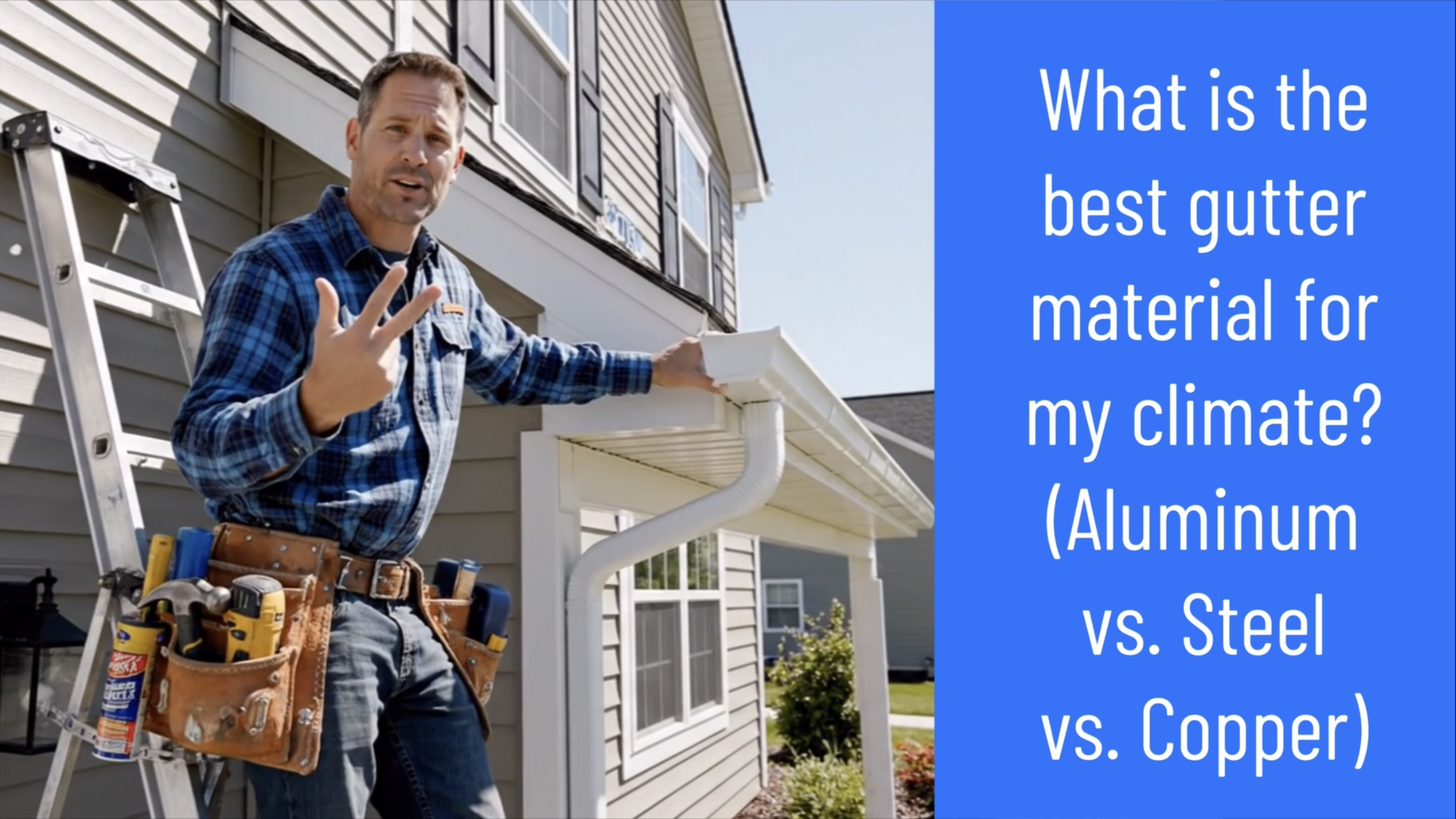
Choosing the right gutter system protects your roof, siding, foundation, and landscaping from stormwater damage. For Kansas City homeowners, the decision often comes down to material: budget, durability, and how each material handles local weather cycles (hot summers, spring storms, and winter freeze-thaw). This Q&A walks through the ten most important questions about gutter installation—with a special focus on the big one: "What is the best gutter material for my climate?" — and gives clear, practical recommendations tailored to Kansas City.
What is the best gutter material for my climate? (Aluminum vs. Steel vs. Copper)
Short answer: there’s no one-size-fits-all — but for Kansas City many homeowners choose aluminum for balance, steel for heavy-duty needs, and copper for longevity and appearance if budget allows. Aluminum is lightweight, resists rust, and comes pre-painted in many colors; it works well in Kansas City’s mix of hot summers and winter freeze-thaw because it won’t corrode and handles thermal expansion reasonably. Galvanized or stainless steel is stronger and better for very large roofs, heavy debris loads, or where mechanical damage is a concern — but steel can rust over long periods if the protective finish is scratched. Copper is the premium option: it can last 50+ years, develops an attractive patina, and needs almost no maintenance, but it’s expensive. Choose aluminum for cost-effective, long-lasting performance in Kansas City; choose steel when structural strength is required (big roof drains, industrial-adjacent properties); choose copper if you want a lifetime system and the architectural look, and budget isn’t the primary constraint.
How does climate affect material performance?
Climate influences corrosion, thermal movement, and mechanical stress. In Kansas City the key factors are heavy seasonal storms, temperature swings (hot summers and freezing winters), and occasional ice. Materials prone to rust (uncoated steel) will degrade faster with repeated wet-dry cycles; finishes matter. Thermal expansion and contraction cause fasteners and seams to loosen over time — materials like aluminum expand more than steel, so installers must account for that with proper hangers and expansion joints. Ice and snow add load: a stronger gauge material or closer hanger spacing helps prevent sagging under ice. Finally, UV and heat in summer can cause vinyl to warp or become brittle over time, so in climates with hot summers vinyl is less reliable for long runs. Match material choice and installation technique to the climate stresses you expect rather than picking solely on price.
What gauge or thickness should I choose for aluminum, steel, and copper?
Gauge matters — thicker material resists denting, sagging, and wind. For aluminum, residential gutters commonly use .027 to .032 gauge; .032 is sturdier and recommended for longer runs or where debris/ice loads are expected. For steel, look for galvanized or coated options with a comparable thickness (often measured in gauges where a lower gauge means thicker metal) — roofing and gutter pros commonly use 24–26 gauge steel for durability. Copper is usually supplied in thicker sheets; 16 oz. (0.0216 in.) copper is typical for long-lasting gutters. Always balance gauge with cost and ease of fabrication: thicker materials are stronger but heavier and more expensive, and installation teams should be prepared to securely fasten heavier gutters.
Are seamless gutters available in all these materials?
Seamless gutters are most commonly produced in aluminum because it’s light enough to fabricate on-site with portable roll-forming machines. Seamless steel and copper gutters are possible but less common; steel requires different on-site fabrication equipment and safety considerations, and copper is often prefabricated in long sections or made by specialist fabricators due to cost. If seam minimization is your top priority in Kansas City, seamless aluminum is the practical go-to for most homeowners. For copper fans, many installers provide long-run custom copper gutters with few seams, but expect a premium price and specialist installers.
How do cost and lifespan compare between aluminum, steel, and copper?
Typical lifecycle/cost trade-offs: vinyl (cheapest, shortest life), aluminum (moderate cost, 20–30 years), painted/galvanized steel (moderate to higher cost, 20+ years depending on corrosion protection), and copper (high cost, 50+ years). Aluminum gives the best upfront value for many Kansas City homes: reasonable lifespan, low corrosion risk, and multiple finish options. Steel can be a smart investment when durability against impact is needed, but if it’s not stainless or properly coated it may need replacement sooner due to rust. Copper is the long-term, low-maintenance champion but comes with a significant upfront cost; over decades the total cost per year can be competitive, but immediate budget may rule it out for many homeowners.
How should I decide between material choices for an older home vs. a new build?
For older homes, consider the home’s architectural style, existing trim/fascia condition, and whether you’ll be re-roofing or repairing fascia. If the fascia is already compromised, replacing gutters with a material that offers easy installation and a lower weight — like aluminum — can reduce labor costs. For historic or high-end properties, copper may be the right aesthetic match and a long-term investment. For new builds, incorporate gutter material selection into the overall design budget: if you plan for long ownership or low maintenance, copper or high-quality aluminum makes sense. Also consider roof pitch and drainage plans for either scenario — heavier materials require stronger attachment points and may increase installation complexity.
Do certain materials work better with leaf guards or gutter protection systems?
Most leaf-guard systems are compatible with aluminum, steel, and copper, but the method of attachment and the guard type may change. Micro-mesh screens and solid-top covers can be installed on aluminum and copper easily. Steel requires guards that account for its thickness and edge profile. If you plan to pair guards with gutters (recommended for tree-lined Kansas City neighborhoods), choose a guard type known to work well with your material and have your installer evaluate compatibility. Some guards attach by snapping into the gutter lip (works best with uniform aluminum profiles), while others are fastened to the fascia or roof edge — the latter are more universal but may cost more to install properly.
How does maintenance vary by material?
Maintenance differences are practical: aluminum is low-maintenance but may dent and will occasionally need repainting or touch-ups if painted. Steel needs inspection for rust or scratched coatings and may require more proactive corrosion control in sensitive areas. Copper requires the least frequent maintenance — it patinas and resists corrosion — but if you prefer the shiny copper look you’ll need cleaning and polishing. All materials require debris removal (or a guard), downspout flushing, and hanger inspection. In Kansas City, where storms and seasonal leaf drop are common, plan for at least biannual inspections for all materials and more frequent checks if you have many nearby trees.
Are there environmental or sustainability considerations when choosing a gutter material?
Yes. Metals like aluminum and copper are highly recyclable and often contain recycled content, which reduces environmental impact compared with many plastics. Copper is valuable and will often be recycled at end-of-life. Aluminum manufacturing is energy-intensive, but recycling aluminum uses far less energy than producing new aluminum, so choosing recycled-content products helps. Steel is also recyclable and durable; finishes that extend life reduce overall environmental cost. Vinyl gutters are less recyclable and become brittle over time, leading to more frequent replacement. If sustainability matters to you, prioritize long-lived, recyclable metals and work with an installer who will responsibly recycle old materials when they remove your existing gutters.
What’s the best way to get a climate-appropriate recommendation for my Kansas City home?
Start with a local inspection. A qualified Kansas City installer will evaluate roof catchment area, pitch, attic ventilation, existing fascia condition, tree coverage, historical storm patterns for your neighborhood, and drainage grading. Ask installers specific questions: do they recommend .032 aluminum or 6-inch gutters for heavy roof valleys? Will a galvanized steel option be warranted if you have roof areas vulnerable to physical damage? If you’re considering copper, ask for examples and references for similar installations in the area. Request written, line-item estimates that show material, gauge, hanger type and spacing, number and placement of downspouts, and warranty details. Local knowledge of Kansas City weather, snowfall/ice tendencies, and common tree debris will help you pick the material that balances cost, durability, and long-term performance.